-- Newsletters --


Free Tips About TMJ!

Enter your Email


Improper brushing can be destructive for teeth and gums

We all know that we need to brush and floss every day. Proper brushing removes food debris and bacteria from the teeth. Improper brushing can be abrasive and destructive, causing problems like: receding gums, wearing away of the tooth root, sensitive teeth or weaker teeth. Sometimes it’s hard to tell if you’re brushing destructively, and brushing habits can be hard to break. To avoid destructive tooth brushing these are some factors to keep in mind.

Choose a soft toothbrush. A soft toothbrush also makes it much easier to remove the plaque below the gumline, where periodontal disease starts. You can make the bristles even softer by running hot water over them before use.

Use a pea-sized amount of non-abrasive toothpaste with fluoride. Toothpastes that are labeled “whitening” or “tartar control” can sometimes be too rough on receding gums and exposed roots, wearing away the root’s protective layer. You can be sure a toothpaste is non-abrasive if it’s labeled “sensitive.”

Use proper brushing technique. Angle the bristles of the brush along the gumline at a 45-degree angle and apply just enough pressure so the bristles slide under the gumline. Vibrate the brush while you move it in short back-and-forth strokes and in small circular motions.

Don’t brush too hard. If you’re not sure whether you’re pressing too hard, hold the end of the brush with two fingers. That will give you enough force to get the job done without doing damage. You can also check your brush bristles. If they are bent over or broken, you’ve probably been pressing too hard. If you find that you have a hard time brushing gently, consider using an electric toothbrush. Electric toothbrushes make it much easier to use less pressure.

Tooth abrasion is caused mainly from improper brushing but can also be caused by grinding your teeth, using your teeth as a cutting tool or chewing on hard objects. Tooth abrasion can occur gradually over a period of time or very quickly. Gradual tooth abrasion allows the body to reduce the severity of tooth abrasion as the body has sufficient time to repair itself. Quick tooth abrasion can cause irreversible damage to the pulp and lead to the consequences of tooth abrasion which not only include crooked teeth but also increase tooth sensitivity, infection and ultimately loss of the tooth.

Talk to your dentist about any of your concerns on brushing or other causes of tooth abrasion. Let them show you what you need to know to keep your mouth healthy and bacteria-free without damaging your teeth.

Neuromuscular Dentistry

There is a relatively new area of dentistry that deals with the whole mouth in a more holistic approach. It’s called neuromuscular dentistry. The word holistic is not a mystical new age shamanism, but simply means that the mouth and all its moving parts are taken into consideration when evaluating mouth pain; it is taken as a whole.

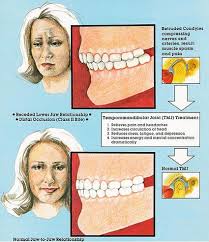
Neuromuscular dentistry is primarily concerned with treating a common disorder of the jaw joint known as Temporomandibular Joint Disorder, or TMD.

What is TMD?

It is a misaligned jaw joint. The jaw joint is in front of each ear. It’s where the lower jaw (mandible) meets the temporal bone of the skull. Inflammation and pain associated with this joint occur with regularity. A neuromuscular dentist diagnoses and treats TMD.

A Simple Guide On What Is TMJ

When people talk about things that are discussed a lot or about conditions and situations that involve words that are hard to pronounce, they usually use initials as a stand-in for the real words. This is especially common when it comes to talking about diseases or medical conditions.

One example of this is when people talk about the temporomandibular joint. Rather than saying the whole word every time they talk about it, they usually just say “TMJ.”

What is TMJ? What problems does a person face when they suffer from TMJ?

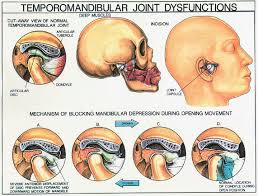
The temporomandibular joint is a ball and socket joint. It is located on both sides of your face and it is responsible for moving your jaw. Whenever you open or close your mouth (or move your lower jaw in a side-to-side), you are using the TMJ. Both parts of the joint (the ball and the socket) are cartilage-covered and are separated by a small sized disk. This disk is there to absorb a small amount of the shock that comes from using your TMJ and it helps with the joint’s free form movement.

Usually the TMJ will work without you having to worry much about it. Every once in a while, however, some people encounter severe problems when the joint fails to work correctly. Between five and fifteen percent of the population has problems with their TMJ at least once in his or her life. While a lot of the problems that most people experience aren’t severe, there are some people who have to deal with extreme problems when the TMJ fails to work correctly.

One of the most prolific problems with the temporomandibular joint is a clicking sound. While this isn’t considered severe or even classified as a real disorder it happens because the termporomandibular joint isn’t working correctly. Other intense problems that happen with TMJ are jaws that are not aligned correctly or an overly worked joint that has been worn down because its owner has been grinding his or her teeth or has a habit of chewing on pens or pencils. Problems with the TMJ can also cause uneven bites. Uneven bites can induce intense headaches or jaw aches with pain that radiates up into the ear area. These problems make eating incredibly uncomfortable and your jaw might hurt even when it is still.

If you are having problems with your TMJ, your dentist or physician can probably help you treat your problems. Often your dentist will refer you to an orthodontist because many of the problems associated with TMJ result from teeth that don’t line up correctly or inappropriate biting or clenching habits. While some problems are small and can be dealt with simply and matter of factly, other problems are more severe and will require extended dental and medical treatments.

Treating Bruxism Through Hypnosis

Right now, hypnosis is used to treat a lot of behavioral problems. And during the recent years, experts are taking advantage of its use for bruxism. Bruxism is the medical term for teeth grinding. Teeth grinding is that annoying sound people unknowingly make while asleep. Bruxism can be caused by a lot of factors. Research show that bruxism could develop due to the physical defects of the jaws and teeth.

However, stress is also a big factor why people grind their teeth at night. And it is also on this cause where hypnosis is most effective at. Practitioners say that hypnosis is the best solution to bruxism caused by jaw tension. While a night guard may do a good job in preventing denture damages, it cannot reduce the pain in the head and the neck that are also caused by teeth grinding.

Bruxism patients are required to attend a 30-minute hypnosis session to correct the problem. The therapy could be just one session or more, depending upon the patient’s mental stature. Inside the session, the subconscious of the patient are be taught to feel the sensation created when the upper and lower teeth touches each other. And the moment that happens, the mind is instructed to relax the jaw muscles and create a comfortable space between the teeth. For people who find going to a therapist a little too much on their budget, they could opt for a bruxism hypnosis CD instead.

The CD is best used before sleeping so it is easier to achieve a state of total relaxation. Some people report that using a hypnosis CD is as effective as the one conducted personally by a hypnotherapist. On the average, patients who subjected themselves to hypnosis session for bruxism claim that they experience relief two to three nights after the therapy session.

Luckier patients go through immediate relief. This means that right at the night of the therapy session, they don’t grind their teeth any longer. However, it is important to note that hypnosis, just like other treatment methods, is a healing process. Patients should not be too impatient on the results of the therapy. It could take some time to work, especially on people whose minds are not too accommodative to these types of treatment procedures. If you want to try hypnosis as a permanent solution to bruxism, talk to a hypnotic expert whose proficiency lies on the treatment of bruxism. Local therapists who had gained reputation in the practice are your best choices.

Can A Chiropractor Fix TMJ Pain?

The popularity of chiropractors continues to grow daily as more people begin to realize the importance to total body health. Along with a good diet and exercise, Chiropractic care plays an instrumental role in maintaining good health by keeping the spine and nervous system operating like a well oiled machine.

Consequently, chiropractors can help relieve the intense pain associated with TMJ or Temporal Mandibular Joint Dysfunction.

Most people never think about it, but the ability to speak, chew and swallow or even yawn is a result of the jaw acting as a hinge to connect the mandible with the skull.

TMJ can be a very serious problem and can be caused by such things as teeth grinding, habitual gum chewing, dental problems, stress, injury, or arthritis. TMJ results when the jaw joint becomes displaced or the surrounding muscles or tendons are irritated. The results are pain and tenderness of the jaw muscle, inability to open the jaw, chew or talk, headaches, dizziness, and/or muffled hearing.

A chiropractor can help with treating TMJ in two ways:
  • Providing Chiropractic adjustments to the neck and/or jaw
  • Recommending special exercise, diet, and lifestyle changes to help speed healing and prevent a relapse.
Chiropractors work to solve problems caused from TMJ by implementing a detailed study of the spine, followed by individual treatment once they have made a diagnosis. Treatment usually includes adjusting the neck or jaw. Chiropractors are very successful treating TMJ. Relief can be immediate or may happen over time.

Chiropractors are concerned with not only treating patients until their pain dissipates, but also assuring their problems are permanently eliminated.

What are some of the philosophical elements associated with chiropractic care? Among them:

1. Naturalism
2. Rationalism
3. Holism

Chiropractic care focuses on the total human body, in the belief that is inter-related with both the environment and individuals’ lifestyles.

Chiropractors can recommend certain muscle spasm relieving exercises that help relax jaw muscles and provide relaxation. Meditation and massage are some of the other methodologies adopted by the chiropractor to treat patients.

In many cases, chiropractic care is proven to be more effective than drugs and medicines. Not only is it more effective, it helps patients through care that is gentler, cheaper, and does not include the potential for negative results later.

 Most people suffering from pain believe medication will provide quick relief for their problems. This is sometimes true, but medications only provide temporary relief of pain and do nothing to eliminate its causes. Medications may also result in harmful side-effects.

Surgery is another option for TMJ. But surgery can be costly, demand time away from work and other activities during recovery, and can be dangerous.

How To Stop Bruxism – How To Stop Grinding Your Teeth Permanently

Perhaps you are wondering how to stop bruxism permanently. Or maybe you are wondering if you are suffering from bruxism.

The problem here is that people who are suffering from bruxism may not know that they are a victim because it usually occurs at night while they are sleeping. Unless they have room mates sleeping in the same room, it may take some time before they find out about their condition.

Perhaps, you may want to look out for the following symptoms. If you are suffering from most of the symptoms described below, it is quite likely that you are grinding your teeth at night.

1) You always have unexplained headaches in the morning
2) Your teeth is sensitive to hot and cold food
3) You always wake up at night for no apparent reason
4) You have some chips on your teeth and you don’t know why
5) Your jaws feel very tight and painful, especially in the morning

If you are suffering from these symptoms, it may be time for you to seek treatment. Depending on the causes of your bruxism, the right treatment can stop your bruxism permanently.

The common causes of bruxism includes stress, dental problems and side effects caused by drugs. The respective treatments are stress reduction therapy, surgery to fix your dental problem and the change of drugs.

In these treatment doesn’t help you to stop your bruxism, a dentist may give you a bruxism mouth guard that you have to wear in your mouth. While this is not a permanent solution to stop bruxism, it can at least prevent you from damaging your teeth in the short run.

How To Stop Bruxism – Is There A Permanent Cure for Bruxism

Are you trying to find out how to stop bruxism? Is there really a cure for bruxism that can treat bruxism permanently?

Well, it depends on what are the causes of your teeth grinding. Depending on the causes, the treatment meted out will be different.

Here are some common causes and treatment of bruxism:

1) Stress
It is said that stress is the number one cause of bruxism. In this situation, the most obvious cure is to work on your stress level. There are many things that you can do to reduce stress.
Exercises like yoga and taiji are very effective in relieving stress. You may even try to relax before you sleep by listening to some relaxing music. If your conditon is caused by stress, this approach can be very effective in stopping bruxism.

2) Drugs
Certain drugs may cause bruxism as a side effect. Consult your doctors and dentists and find out what is the actual problem. If the drugs are causing you to grind your teeth at night, sometimes, all that is necessary is for your doctor to change the drug that you are consuming.

3) Defect in your teeth structure
Sometimes, dental problems can also cause bruxism. A possible treatment may be to perform surgery to correct your teeth structure. You will want to consult your dentist about it.

What happens if the methods described above doesn’t stop bruxism. In such a situation, you dentist may give you a night guard for you to wear inside your mouth. However, this is not a permanent solution as you are still grinding your teeth. The only difference is that now, you are damaging the mouth guard instead of your own teeth.

While bruxism is not a very serious disease, you should try to stop bruxism as soon as possible it as it can lead to very serious, long term damage to your teeth if you don’t start doing something about it now.